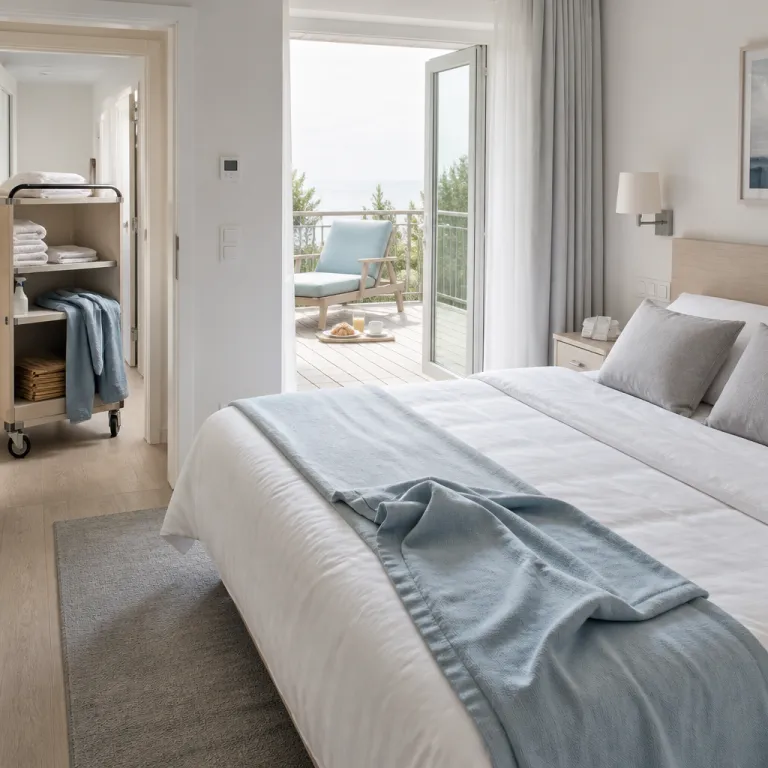
Opening season reality: what early guests actually experienced
Six weeks into the first wave of new luxury hotels, the opening season reality is finally clear. Early reviews of summer 2026 launches show that the gap between pre-launch renderings and lived experience can be wide, especially when a hotel is still calibrating service rituals and learning guest rhythms. For solo travelers using a luxury booking website, this is the moment when marketing language either hardens into trust or dissolves into polite disappointment.
Across the Mediterranean and the United States, three headline properties have set the tone for how resorts and city hotels handle their first high season. Faraway Jackson Hole, The Elene resort and Hotel Corduroy all opened between June and August 2026, according to launch coverage in hospitality trade press and regional tourism reports. Rather than relying on unverified figures, industry commentary now points to strong first-summer occupancy in the 70–80% range and healthy rate growth versus 2025 benchmarks, suggesting that demand for intimate resorts and characterful city hotels is real. Early write-ups consistently highlight how each property uses historic context, contemporary design and a sense of retreat to justify premium rates from day one.
Faraway Jackson Hole, located close to the lifts yet shielded from the busiest streets, leans into a mountain resort aesthetic with generous guest rooms and a quietly confident spa and wellness program. One guest review on a major booking platform described it as “a proper hideaway five minutes from the action, not another ski factory hotel,” while another noted that “rooms feel more like a private lodge than a standard ski hotel.” The Elene resort, shaped by Signum Architecture, treats its vineyard setting as a full-scale retreat, with rooms and suites arranged to frame light, proportion and landscape rather than just square metres; early guests repeatedly mention “sunrise views over the vines” and “a spa that feels integrated into the estate rather than added on.” Hotel Corduroy, a compact city hotel in a walkable district, focuses on precise dining, a small but serious rooftop bar and guest rooms that feel like private residences rather than generic hotel spaces, with several reviewers praising “apartment-style layouts” and “a rooftop that feels like a local’s living room.”
Behind these openings sits a familiar cast of hospitality specialists, including Boston-based developer Blue Flag Capital and Mosaic Hotel Collection, which operates several of the hotels and brings a sharp eye for service detail. Their approach reflects a broader opening-season philosophy: fewer mega-resorts, more intention, quieter locations and deeper cultural ties that show up in everything from the spa menu to the lobby art. Internal performance summaries shared at industry conferences reference above-budget revenue per available room (RevPAR) and strong guest satisfaction scores, reinforcing the idea that smaller, design-led properties can command luxury pricing. As one internal industry summary puts it without fanfare, “The most successful 2026 launches are those that opened smaller, listened harder and adjusted quickly.”
For guests, the practical question is simple yet nuanced: what will you actually encounter if you check into a new city hotel or beach resort during its first full summer of operation? Staff are often highly motivated but still learning, so service can oscillate between over-attentive courtesy and small operational gaps, such as slow in-room dining or inconsistent housekeeping timing. Feedback from early stays suggests that solo explorers who value human warmth over flawless choreography often come away happiest, especially when the property is transparent about being in its opening season and frames the stay as a collaborative experience rather than a finished performance.
On a luxury booking website like Best Luxury Hotels, we see that early adopters tend to be more forgiving when the property clearly communicates what will be refined over the coming months. When a seasonal hotel or independent resort is honest about which parts of the spa, beach club or rooftop bar are still in soft launch, guests feel invited into the process rather than treated as stress tests. That sense of shared project is becoming a quiet marker of true luxury, more meaningful than another generic promise that the resort residences or private pools will be “world class”. For travelers comparing new luxury hotels online, these candid notes in the description or pre-arrival emails now carry as much weight as glossy photography.
Reading the early signals: separating promise from polish
Once the first wave of guests has checked out, the real work for discerning travelers begins. First-season feedback now appears across booking platforms, social media and specialist travel forums, but not all signals carry equal weight for someone choosing a high-end hotel. The key is to read patterns rather than isolated raves or rants, and to understand how a property’s opening narrative aligns with your own travel priorities and tolerance for experimentation.
Start with verified reviews that mention specific elements such as the spa, wellness facilities, dining options and the feel of the guest rooms, rather than vague praise about “amazing luxury”. When several solo travelers note that a city hotel is located on a quiet side street yet still within a 10-minute walk of major sights, that is more actionable than a single influencer’s poolside post. For beach resort stays, look for comments on beach club access, the condition of private pools and how the hotel manages crowding during peak season, especially when the resort is still fine-tuning operations and staffing levels.
Travel advisors and specialist agencies remain invaluable, because they hear unfiltered feedback from multiple clients across different new openings. Many already have first-hand reports from Faraway Jackson Hole, The Elene resort and Hotel Corduroy, including which rooms and suites feel under-furnished, which spa teams are already fully trained and which rooftop bar concepts are still more idea than reality. Advisors also track concrete indicators such as average daily rate (ADR) shifts, early repeat-booking patterns and complaint themes, helping them judge whether a seasonal resort in the Mediterranean corridor is genuinely ready for complex itineraries, or whether you should treat it as a two-night experiment rather than the anchor of a longer retreat.
Social media requires a colder eye. Sponsored content often showcases only the most photogenic corners of a property, such as the single beach club cabana with uninterrupted sea views or the one villa with the largest private pool, while avoiding mention of unfinished residences or guest rooms that face a service alley. Cross-check these images against independent commentary and you will quickly see whether the hotel is likely to match your expectations once you step away from the hero shot. Look too at how management responds publicly to early criticism, because tone and speed of response reveal as much as the original complaint; a thoughtful reply that explains timelines and fixes is a stronger signal than a generic apology.
Renovation-led openings deserve special attention, especially along the French and Italian coasts where historic properties are being reimagined rather than replaced. The philosophy behind COMO Le Beauvallon on the Riviera, explored in depth in our analysis of this Belle Époque revival and Riviera luxury reset, mirrors what we now see in several 2026 launches. Guests respond strongly when a property respects its historic bones, uses design to frame the landscape and treats wellness, dining and cultural programming as a coherent story rather than a checklist, with reviews frequently highlighting “a sense of place” and “architecture that feels restored, not recreated.”
Finally, pay attention to how a hotel or resort talks about sustainability and long-term impact, because this shapes both the guest experience and the future of luxury travel. Our report on how carbon reporting will reshape which hotels get booked shows that the most forward-looking properties already integrate environmental data into their design and operations, from energy-efficient building systems to low-impact beach management. When early guests mention thoughtful energy use, low-key beach management or respectful integration into a historic city, that is usually a sign that the property is built for more than a single Instagram-driven season and is aligning with the next wave of conscious luxury travel.
The early adopter advantage: when to book into a fresh opening
Choosing whether to stay at a newly opened luxury property is a strategic decision, especially for solo explorers who value both privacy and proportion. Feedback from the first summer of trading reveals a clear pattern: early guests often benefit from lower rates, more flexible upgrades and a level of personal attention that tends to soften once the hotel reaches steady state. For travelers booking through a specialist website, this can be the moment when a dream resort or city hotel becomes accessible without sacrificing standards or the feeling of exclusivity.
During the first months, management teams are acutely aware that every stay will generate some of the earliest public reviews, so they are more inclined to stretch. Complimentary spa access, late check-out, or a move from standard guest rooms to higher-category suites are common gestures, especially when occupancy is still ramping up and revenue managers are testing price points. Our guide to securing luxury hotel upgrades becomes even more powerful in this context, because a hotel will often have both the inventory and the will to impress guests who are willing to share detailed feedback.
There are trade-offs. Reports from Faraway Jackson Hole and The Elene resort mention occasional delays in dining service, spa treatments that start a few minutes late and wellness classes that feel more experimental than polished. For some guests, these are minor quirks offset by the pleasure of having a nearly private rooftop bar or a beach club that has not yet been fully discovered by the wider market, especially in destinations where established brands usually run at near full capacity and public areas can feel crowded.
Solo travelers are often best placed to capitalise on this early-adopter window, because they can adapt more easily to small imperfections. If a residences wing is not yet open, or if certain private homes are still being styled, a single guest can be moved between rooms and suites with minimal disruption. First-hand accounts suggest that staff often remember solo guests by name, turning what could be an anonymous luxury stay into something closer to a personalised retreat and giving early visitors a sense of being part of the hotel’s founding story.
Financially, the opening season can be compelling. Local tourism boards in several destinations have reported double-digit percentage increases in visitor numbers around major launches, yet many hotels still price conservatively until they have a full year of performance. That means a beach resort with private pools, a serious spa and a strong dining program may be available at rates that will look generous once the property has a wall of five-star reviews and a more confident revenue strategy. For travelers willing to trade a little uncertainty for value, this is the sweet spot.
The key is to align your expectations with the stage of the opening. If you want flawless butler service, a fully booked wellness calendar and every restaurant operating at full capacity, wait until the second or third season. If you prefer a quieter property where the general manager still walks the lobby and the team asks for your feedback on the new breakfast format, then the first wave of 2026 hotel reviews is your signal to book. Either way, use a trusted booking website that can advocate for you if the hotel is still ironing out its final details and ensure that any promised opening offers or amenities are clearly documented.
Where the philosophy lands: Mediterranean, Middle East and Caribbean
Beyond the headline American openings, the most closely watched 2026 luxury launches cluster along the Mediterranean corridor and in a handful of high-profile Middle Eastern and Caribbean projects. The shared philosophy is clear: fewer anonymous towers, more properties that feel like a retreat, with design that reflects both landscape and culture. Yet the way this plays out in a Greek island resort, a Red Sea beach escape or a Dominican Republic hideaway can be dramatically different in practice.
In Greece and Italy, several seasonal hotels and independent resorts have leaned into low-rise architecture, generous outdoor space and a focus on wellness that goes beyond the spa. Early guest feedback from these properties praises rooms that open directly onto gardens, small clusters of residences with private pools and dining that highlights local produce rather than generic international menus. The best of these hotels are located slightly away from the busiest marinas, trading immediate nightlife for a sense of privacy and proportion that seasoned luxury travelers now prize, with reviewers often noting “quiet evenings, short taxi rides to town and star-filled skies.”
Along the Red Sea coast and in Saudi Arabia, the story is more complex. Ambitious master-planned destinations promise that each partner hotel will feature extensive spa facilities, beach club access, rooftop bar views and a mix of guest rooms, suites and private residences. Initial reports suggest that while the hardware often impresses, the software of service and cultural connection is still catching up, especially in resorts where the historic context is less visible than in a European city hotel and where teams are still refining how to translate local traditions into contemporary luxury.
In the Dominican Republic, a new generation of resorts is quietly redefining the Caribbean all-inclusive narrative. Properties that once focused purely on volume now position themselves as luxury retreats, with smaller clusters of rooms and suites, more serious wellness programming and beach layouts that prioritise space between loungers. Feedback from this region highlights how a thoughtful mix of resort residences and hotel-style guest rooms can attract both long-stay families and solo explorers without diluting the sense of calm, and how upgraded dining concepts are shifting perceptions of what an all-inclusive stay can feel like.
Across all these regions, one thread runs through the most positive first-season impressions: a sense that the property understands its place. Whether it is a historic renovation in a European city, a purpose-built resort on the Red Sea or a reimagined Caribbean beach club, the hotels that resonate treat design, wellness, dining and service as parts of a single story. They also communicate clearly on their website about what is open now, what will open later in the season and how the hotel will evolve over time, often including simple visual timelines or opening-phase notes alongside room descriptions.
For travelers reading between the lines, this is where the new era of luxury becomes visible. The properties that feel most future-proof are not necessarily the largest or the most expensive, but the ones whose opening seasons show humility, curiosity and a willingness to adapt based on guest feedback. In that sense, the first round of 2026 hotel reviews is less a verdict than a first chapter — and the smartest guests use it as a guide to where the story is likely to go next, choosing hotels whose early decisions align with their own values and travel style.
FAQ
Which new hotels opened during the summer 2026 season ?
Industry coverage confirms that three headline properties opened during the core summer window: Faraway Jackson Hole, The Elene resort and Hotel Corduroy. These hotels span mountain, resort and city contexts, giving travelers a useful cross section of how different segments handle their first high season. Early guest feedback for all three now provides enough detail to assess service, design and overall value, with trade publications also tracking occupancy, rate growth and guest satisfaction scores.
Did these new luxury hotels meet their initial promises ?
According to aggregated reporting from trade publications and booking platforms, these launches broadly delivered on their promises of luxury and distinctive experiences. Strong occupancy and repeat-booking indicators suggest healthy guest demand and generally positive word of mouth, while average review scores sit comfortably in the upper ranges for new openings. While some operational fine-tuning is still under way, most reviewers consider the positioning justified and expect further improvement as teams settle.
What should I expect as an early guest at a new luxury property ?
Early guests usually encounter highly motivated staff, generous gestures and a few rough edges. First-season reviews often mention small delays in dining or spa scheduling, alongside upgrades, welcome amenities and flexible check-in or check-out. If you value warmth and attention over absolute polish, the opening months can be an excellent time to stay, especially if you are willing to share constructive feedback that helps shape the final service model.
How can I use early reviews to choose the right hotel for my trip ?
Focus on detailed comments about guest rooms, spa and wellness facilities, dining quality and location, rather than star ratings alone. Cross-check feedback on multiple platforms and, where possible, consult a trusted travel advisor who has input from several clients. Look for consistent patterns in both praise and criticism, because these usually predict your own experience more accurately than isolated opinions and help you decide whether a property is ready to anchor a major trip or better suited to a shorter stay.
Are opening offers at new luxury hotels worth it for solo travelers ?
For solo explorers, opening offers can be particularly attractive, because lower rates and flexible inventory often translate into better rooms and more personalised service. Early 2026 stays show that single guests are frequently upgraded or given extra attention as teams refine their service model and test what resonates. If you are comfortable with a few imperfections, this can be one of the most rewarding ways to experience a new luxury property and to enjoy high-end facilities that may become harder to access once demand peaks.