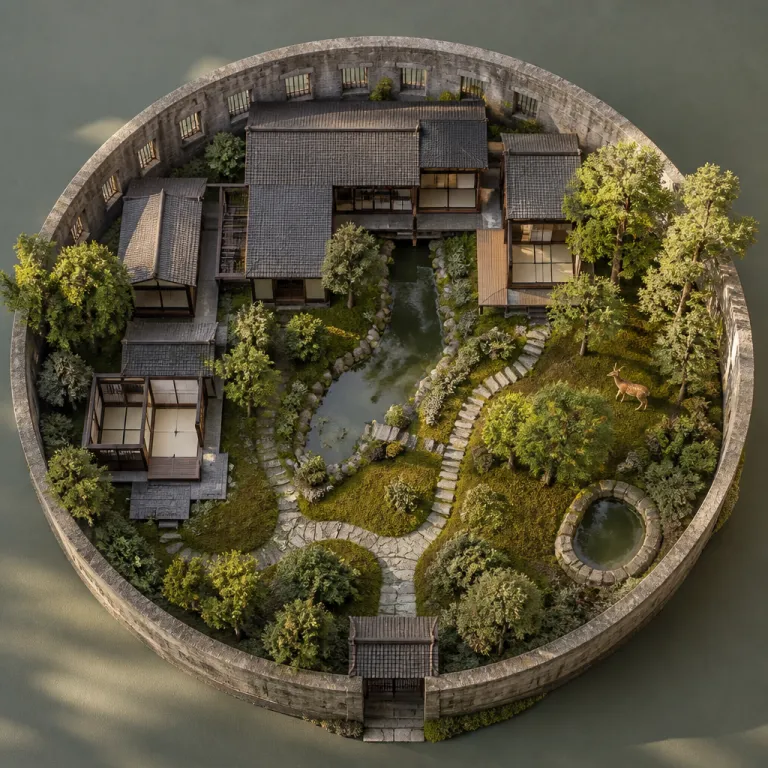
From great prisons to high design: how Hoshinoya reframes Nara’s red brick icon
Hoshinoya Nara Prison luxury hotel is the most closely watched opening in Japan luxury hospitality this decade. The former Nara prison, one of the Five Great Prisons commissioned by the Meiji government, is being recast by Hoshino Resorts as a 48 suite sanctuary where history culture and high comfort share the same brick walls. For travelers who track land history as carefully as room categories, this property signals a new level of ambition for Japan.
The original Meiji era complex in Nara was designed by architect Keijiro Yamashita with a radial plan and a central guard tower, and its iconic red brick walls remain the defining gesture of the site. Hoshino Resorts, the brand behind Hoshinoya, Kai and Omo properties across Japan, has committed to adaptive reuse rather than erasure, working with Azuma Architect & Associates to keep the historic walls and red brick corridors legible. This is not a themed prison fantasy ; it is a cultural property where the architecture still reads as a former jail while the interiors quietly meet the expectations of a modern luxury hotel.
Each of the 48 guest rooms at Hoshinoya Nara merges up to ten former cells into one suite, preserving the long, narrow proportions so that the memory of the prison remains in the spatial rhythm. Within those rooms, new timber structures float away from the brick walls, creating warm layers of design that soften the Meiji geometry without hiding it. The result is a hotel where time feels stacked rather than erased, and where a stay becomes a study in how Japan luxury can respect original fabric while still delivering deep comfort.
Living with a prison museum: dual identities and the guest experience
What sets this luxury hotel apart is not only its architecture but its coexistence with the on site prison museum, which opened to the public shortly before the hotel. The former Nara Prison Museum occupies part of the complex as a preserved cultural property, allowing visitors to walk untouched cell blocks and understand the land history of punishment and reform in Meiji Japan. For hotel guests, that means your stay unfolds beside a working heritage institution rather than a stage set.
Hoshino Resorts has long used distinct themes across its Hoshinoya, Kai and Omo brands, and here the narrative is unusually sharp ; the story of a prison becoming a place of rest is handled with almost monastic restraint. Public areas lean into the iconic red brick and historic walls, while the detached dining hall serves Japanese French cuisine that nods to the Meiji era fascination with Europe. Staff are trained to guide guests between the hotel and the museum, framing the experience less as dark tourism and more as an immersion in history culture and evolving ideas of justice.
For travelers used to European conversions of palazzos or monasteries, this Japan luxury project feels more preservation first and less decorative, closer in spirit to the way some safari lodges reinterpret colonial era outposts into contemporary retreats, as seen in many tented camps that now define safari luxury reinvented. Here, the original prison corridors remain visible, sightlines to the central tower are maintained, and interpretive signage is handled by the museum rather than the hotel brand. The message is clear ; this is still Nara prison in the collective memory, even as it will open as a place where time is now spent voluntarily.
Japan’s maturing luxury market and what this property means for future stays
The opening of Hoshinoya Nara Prison luxury hotel marks a turning point for Japan luxury, where adaptive reuse becomes a front line strategy rather than a niche experiment. Hoshino Resorts has already proven with Hoshinoya Nara and other resorts that domestic travelers will pay for narrative rich stays, and this property extends that logic into more challenging land history. For international guests comparing options from Kyoto ryokan to urban towers in Tokyo, the Nara prison project offers a different kind of prestige ; not height or marble, but access to a once forbidden site.
Unlike many conversions where original details are diluted, here the brick walls, barred windows and axial corridors are treated as assets that shape the design of every room. Suites are organized around distinct themes that respond to the Meiji era architecture, from meditative layouts that emphasize the thickness of the walls to more residential arrangements that foreground long views across the courtyards. The detached dining hall and carefully lit walkways turn the walk back to your room into a nightly reminder that this was once a place of confinement, now reimagined as a controlled, almost cinematic freedom.
For travelers who split their calendar between European heritage palaces, coastal retreats in places like the refined luxury hotel escapes of Acapulco and urban icons in cities such as the San Francisco luxury hotels for an elevated urban retreat, Hoshinoya Nara Prison stands out as a different benchmark. It shows how a Japanese brand with deep experience across Hoshinoya, Kai and Omo portfolios can handle a former jail with the same care it brings to hot spring resorts, while still operating under a clear privacy policy and international expectations of service. As Hoshino Resorts positions this hotel within its wider brand architecture, the message to the market is unambiguous ; adaptive reuse, when handled with this level of rigor, is not a compromise but the new apex of cultural property driven luxury.
Key facts and practical details for planning your stay
What is Hoshinoya Nara Prison? A luxury hotel converted from a Meiji-era prison. When does Hoshinoya Nara Prison open? June 25, 2026. How many rooms does Hoshinoya Nara Prison have? 48 rooms.
Sources
Hoshino Resorts official site ; Azuma Architect & Associates project information ; Designboom architecture coverage.