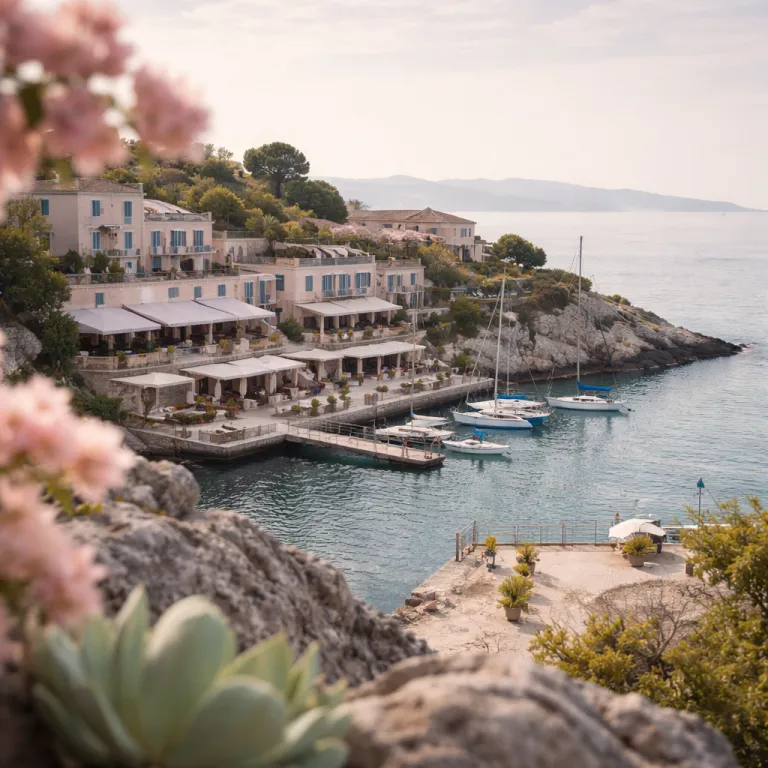
From Paul Ricard’s playground to Zannier’s island village
The story behind the Zannier Île de Bendor hotel opening 2026 begins with an audacious purchase by Paul Ricard in the 1950s, when he transformed a rocky outcrop off Bandol into a glamorous island refuge. Today that same île in the south of France is being reimagined by Zannier Hotels as a fully fledged village, not a sealed resort, with privacy created by geography rather than by walls. For guests planning future luxury travel on the French Riviera, this shift toward an open yet contained private island experience signals where high end hospitality is heading.
Île Bendor sits just off the Côte d’Azur coastline, a short boat ride from Bandol in Provence, and the crossing is designed as a psychological threshold for arriving guests. The seven minute transfer, described in early Zannier Hotels previews and Ricard family materials, turns the island into a self contained world where the sea acts as the perimeter instead of security gates. For couples used to mega resorts along the Riviera, the promise here is intimacy at village scale, with an announced 93 keys spread across three distinct neighbourhoods, according to initial development briefs and the Zannier Hotels Île de Bendor press release.
The project is led by Zannier Hotels in partnership with the Ricard family, with Paul Ricard’s great grandson Marc de Jouffroy overseeing a five year restoration that respects the original artistic spirit of Bendor. Arnaud Zannier and his team have leaned into the island’s mid century heritage, when Salvador Dalí and Joséphine Baker stayed here, but they have stripped away visual noise in favour of calm, tactile luxury. As Zannier has suggested in concept notes, the ambition is “to revive Bendor as a lived in Mediterranean village rather than a closed resort.” For travellers who read opening calendars closely, Zannier Bendor now sits in the same conversation as other private island debuts, yet its scale and history make it feel more like a Riviera hamlet than a remote hideaway, a nuance often highlighted in new opening round ups on Best Luxury Hotels.
Three villages, one philosophy: privacy through geography
The Zannier Île de Bendor hotel opening 2026 revolves around three accommodation clusters that function like micro villages, each with its own rhythm and style. Delos channels a 1960s Riviera mood with 39 rooms and suites, while Soukana brings 49 keys wrapped around a 1 200 square metre wellness centre that anchors the island’s spa life. At the edge, five Madrague houses form a more secluded enclave for family stays, with private gardens that make the most of the island’s Provencal light and sea air, according to the operator’s early planning briefs.
Soukana is the spiritual heart for wellness, with hammam, cold and mud baths, indoor and outdoor pools and eight treatment rooms arranged around a calm courtyard. This is where guests will move between yoga decks, quiet reading corners and the main spa centre, creating a daily ritual that feels more village than resort corridor. Couples focused on wellness experiences can stay in Soukana Madrague facing the sea, then drift on foot to treatment rooms, rather than navigating lifts and long internal hallways, a layout that reflects broader wellness design trends discussed in Best Luxury Hotels’ spa and wellbeing guides.
The Madrague houses are designed for multi generational travel, with two storeys, generous living spaces and gardens that allow children to roam while adults enjoy the view. For readers interested in how luxury brands are rethinking family stays, the island’s kids club and these houses echo broader shifts explored in guides to how luxury hotel brands are finally taking family travel seriously on Best Luxury Hotels. Across Delos, Soukana and Madrague, the idea is that guests can walk everywhere within minutes, reinforcing the sense of a lived in island village instead of a vertical hotel block, while on island electric buggies are planned for those who prefer not to walk.
Dining, rates and why this opening matters for luxury travel
Food and social life are central to the Zannier Île de Bendor hotel opening 2026, with eight dining concepts led by Michelin starred chef Lionel Lévy, as outlined in the official Zannier Hotels announcement. The island will open with three restaurants positioned as anchors — including Le Grand Large facing the sea, Nonna Bazaar with its generous Mediterranean sharing plates and a crêperie that nods to Ricard’s coastal France roots. Around them, more casual restaurants and bars will create a Riviera promenade feel, where guests can move from aperitif to late night digestif without leaving the island, while still having the option to visit nearby Bandol for additional dining.
For couples weighing whether the rates make sense, the value lies in the combination of privacy, design and programming rather than in sheer room size. Stays are expected to include the short boat transfer from Bandol, breakfast and access to the wellness centre, with paid add ons for spa rituals, water sports and curated cultural experiences linked to the Ricard legacy. Early planning guidance from the operators suggests booking six to nine months ahead for peak summer, with sample opening offers around 750 US dollars per night including breakfast, and notes such as “Ferry rides free May-June 2026. Book accommodations early. Explore local Bandol attractions,” although readers should always confirm final pricing, opening dates and inclusions directly with Zannier Hotels or their preferred advisor.
Within the wider landscape of new luxury openings, Zannier Île stands alongside projects such as Aman East Cape in Mexico and Luura Cliff on Paros, all part of a season where luxury hotels are placing their biggest bets on self contained coastal enclaves, as analysed in Best Luxury Hotels’ report on where luxury hotels are placing their biggest bets this season. Yet Zannier Bendor is unusual because it is not a remote atoll but a walkable island off the Côte d’Azur, with easy access to mainland France for pre or post stays. Practical details, from the seven minute boat crossing to on island electric buggies and a stated focus on preserving Paul Ricard’s original gardens and local partnerships, point to a project that balances access, light footprint and atmosphere. For travellers who read beyond the marketing, this is less about spectacle and more about a return to scale, where a historic island becomes a Riviera village designed for slow, high touch stays and a more sustainable style of luxury travel.